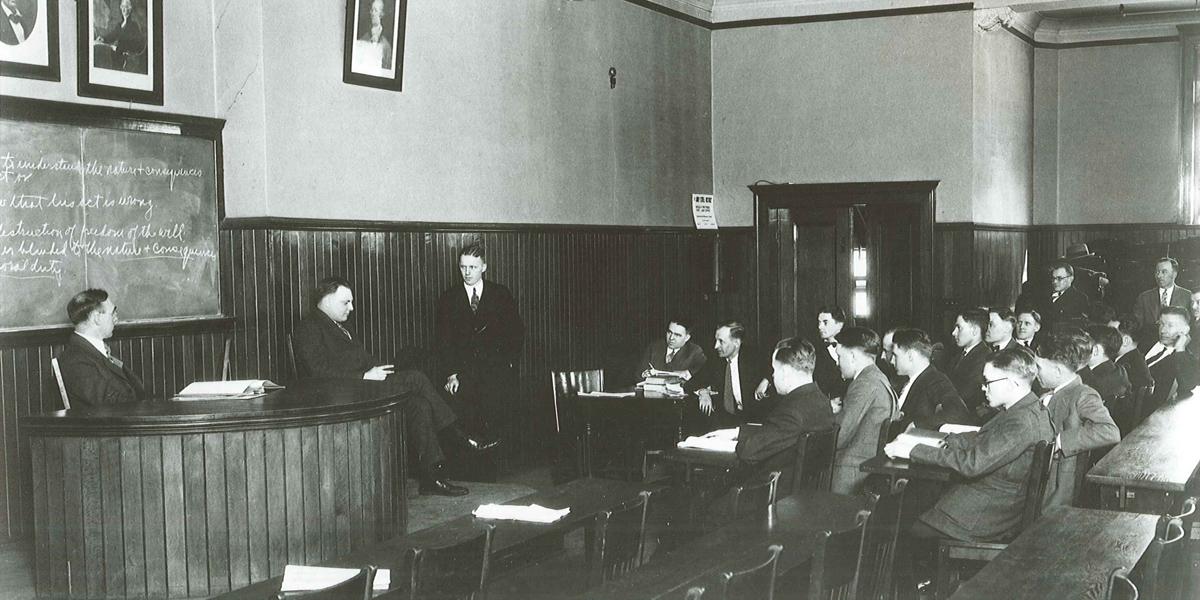



Immigration historians have put out a second edition of the #ImmigrationSyllabus. It's a free, public reading list meant to help instructors teach U.S. immigration with solid evidence at a time when rhetoric about it is running hot. The University of Minnesota Twin Cities' Immigration History Research Center (IHRC) compiled the update with the Immigration and Ethnic History Society, and the University flagged the coverage this week for its campus connection.
Llana Barber led the update. She directs the IHRC and holds UMN's chair in immigration history. Barber said the syllabus helps faculty "help students build their knowledge about immigrant experiences and build their capacity to think critically about U.S. immigration policy and U.S. immigration law." Along with scholarly papers and books, the list includes newspaper op-eds, documentaries and podcasts, so instructors can work pieces into courses that aren't strictly about immigration.
A.K. Sandoval-Strausz, a historian at Penn State whose work is on the list along with Barber's, described the syllabus as a statement from specialists in the field. He said "this is the most thoroughly documented, useful, accessible set of sources."
The project started in 2016, when immigration historians affiliated with the IHRC and the society built the first version in response to that year's presidential election. A new team of scholars produced the revised edition in consultation with the original authors. It's laid out like a semester: 15 weeks in roughly chronological order. It runs from Foundations, Expansion and Nativism through Mass Migration, Restriction, Empire, Citizenship and Labor, then on to Refuge, Activism, Borders, and Detention and Deportation. Week 15 covers the 21st century.
The whole thing lives on a University of Minnesota Libraries site, so anyone can open it, from a TA planning a discussion section to a curious reader. You can browse it at the #ImmigrationSyllabus site.
Barber is an associate professor of history who studies immigration and Latine history, with a focus on the Caribbean diaspora. Her current research follows Haitian migration to the United States, the Dominican Republic and the Bahamas in the late 20th century. In her article "Anti-Black Racism and the Nativist State," she puts Black mobility and anti-Black racism at the center of U.S. immigration history. The IHRC sits in the College of Liberal Arts and remains one of the country's main hubs for immigration scholarship and archives.