


Children and teens treated with stem cell transplants often carry the stress of it long after treatment ends, the university said. New University of Minnesota research is testing whether virtual reality can help with their recovery and psychological health.
The study is led by Erica Timko Olson, an assistant professor in the Twin Cities School of Nursing. It focuses on young people getting a hematopoietic stem cell transplant (HSCT), which is often used to treat cancers like leukemia and lymphoma. The treatments are long and intense, and the university said they put patients at high risk of physical, psychological and social stress.
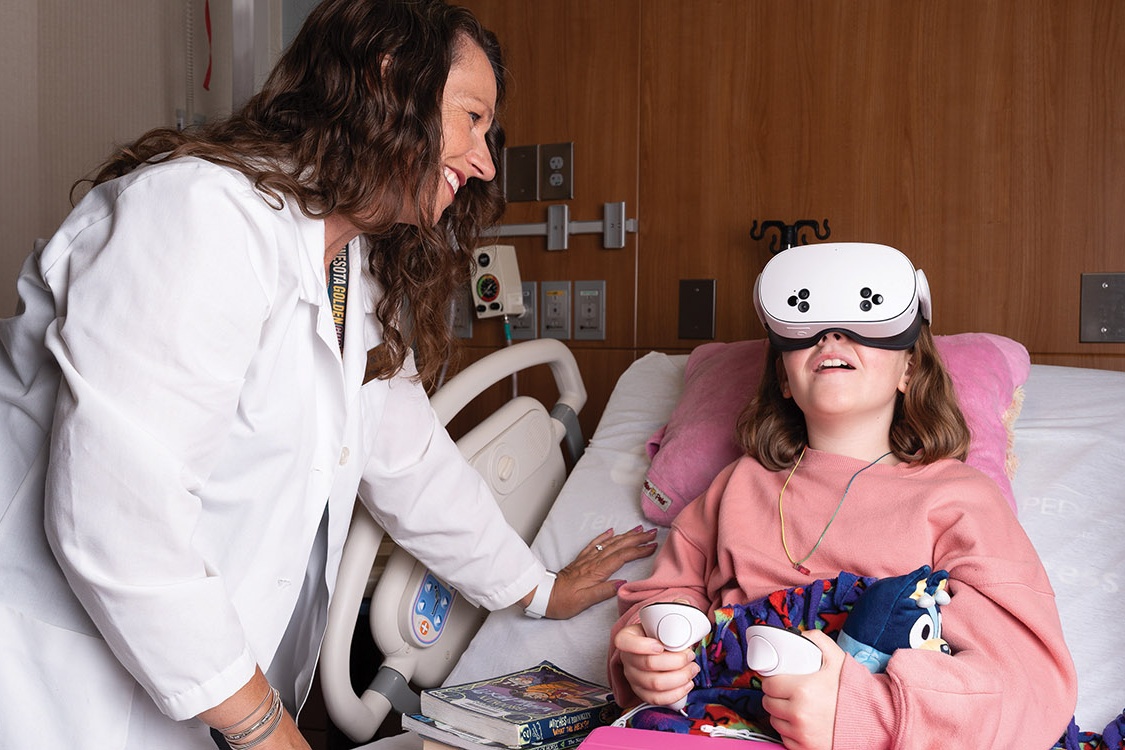
The setup is simple. Patients hospitalized at the University of Minnesota Blood and Marrow Transplant Program put on a VR headset and pick from 15 audio-guided nature scenes, from oceans and forests to fields of dinosaurs or butterflies. The narration asks them to notice details like the wind, the waves and the wildlife. For a kid who may spend weeks in a hospital room, that's a lot of outdoors to borrow.
For now it's a pilot study. Researchers are checking feasibility, adherence and acceptability: whether young patients will actually use the headsets, keep using them and find them worthwhile. The study compares nature VR with an attention-control intervention.
"Nature virtual reality offers an innovative approach to improve wellbeing of children and adolescents undergoing HSCT," Timko Olson said.
The bigger goal is what happens years later. "If we can minimize those psychosocial effects, they can go on to college, have careers and have healthy relationships rather than have the negative effects of their treatments carry them through the rest of their lives," Timko Olson said.
Next, Timko Olson plans to design a 12-week nature VR protocol to support the psychological health and wellbeing of young adult cancer survivors. That would carry the idea from the hospital bed into the years after treatment, when the university says the stress tends to stick around. The university has not announced a timeline for that next phase.