


The sixth National Climate Assessment, the report on how climate change is hitting the U.S., stalled in April 2025. That's when the Trump administration halted the work and told the volunteer scientists writing it that they were no longer needed. A good number of them didn't stop working. The Washington Post covered that effort this week, and the University is pointing to its own role in it.
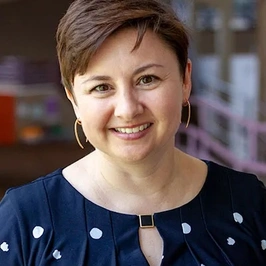
The UMN connection is Melissa Kenney, director of research and knowledge initiatives at the Institute on the Environment. She's lead author of the first paper in the U.S. Climate Collection, which 175 independent climate researchers put together, many of them veterans of earlier national assessments. The paper came out September 22, 2026, in 2 journals at once: Earth's Future, published by the American Geophysical Union, and the Bulletin of the American Meteorological Society. The collection doesn't replace the federal report. It's meant as a home for the research that would have formed its foundation.
"Scientists working on climate change are continuing to do the work," Kenney said. She added that the research "will be available if there are future U.S. national climate assessments."
Kenney led the paper with Bob Kopp of Rutgers University and Costa Samaras of Carnegie Mellon University. Titled "Research priorities for robust climate assessments in the United States," it took more than a year. The co-leads split volunteers into topic teams and asked each one for 3 to 5 research priorities, and the draft went through peer review before publication. The topics run from planet-scale climate and social systems to sectors like agriculture and energy to specific U.S. regions. A handful of priorities cut across all of them, including how greenhouse gas emissions amplify climate hazards and how extreme events stack up and set off cascading infrastructure failures.
"You might see, say, drought and heat combined, and you have not just an additive effect but a multiplicative impact," Kenney said in an Institute on the Environment Q&A. She also argued that climate responses need to be coordinated across levels of government. "If the responses are really siloed, then there's real potential that groups of people can be working in ways that they genuinely believe are in the larger best interest, but in fact almost cancel each other out."
The basic pitch is about keeping up. The last National Climate Assessment came out in 2023, and Kenney said the goal is to answer what has happened since then and what research has come out. "Climate science is changing at such a rapid pace," she said. "There's so much research being produced – and in so many different disciplinary fields." Asked why she volunteers for this, she said: "It is my deepest professional obligation to make sure that the specialized knowledge that I have – that our scientific community has – is not just held within the scientific community." The full interview is on the Institute on the Environment's site.