

A reader asked the Star Tribune's Curious Minnesota column why fish in northeastern Minnesota tend to carry higher mercury levels than fish elsewhere in the state, and whether wildfire smoke might be part of the answer. The paper took the question to Christopher Filstrup, an applied limnologist at the University of Minnesota Duluth's Natural Resources Research Institute, who's spent several years chasing exactly that question.
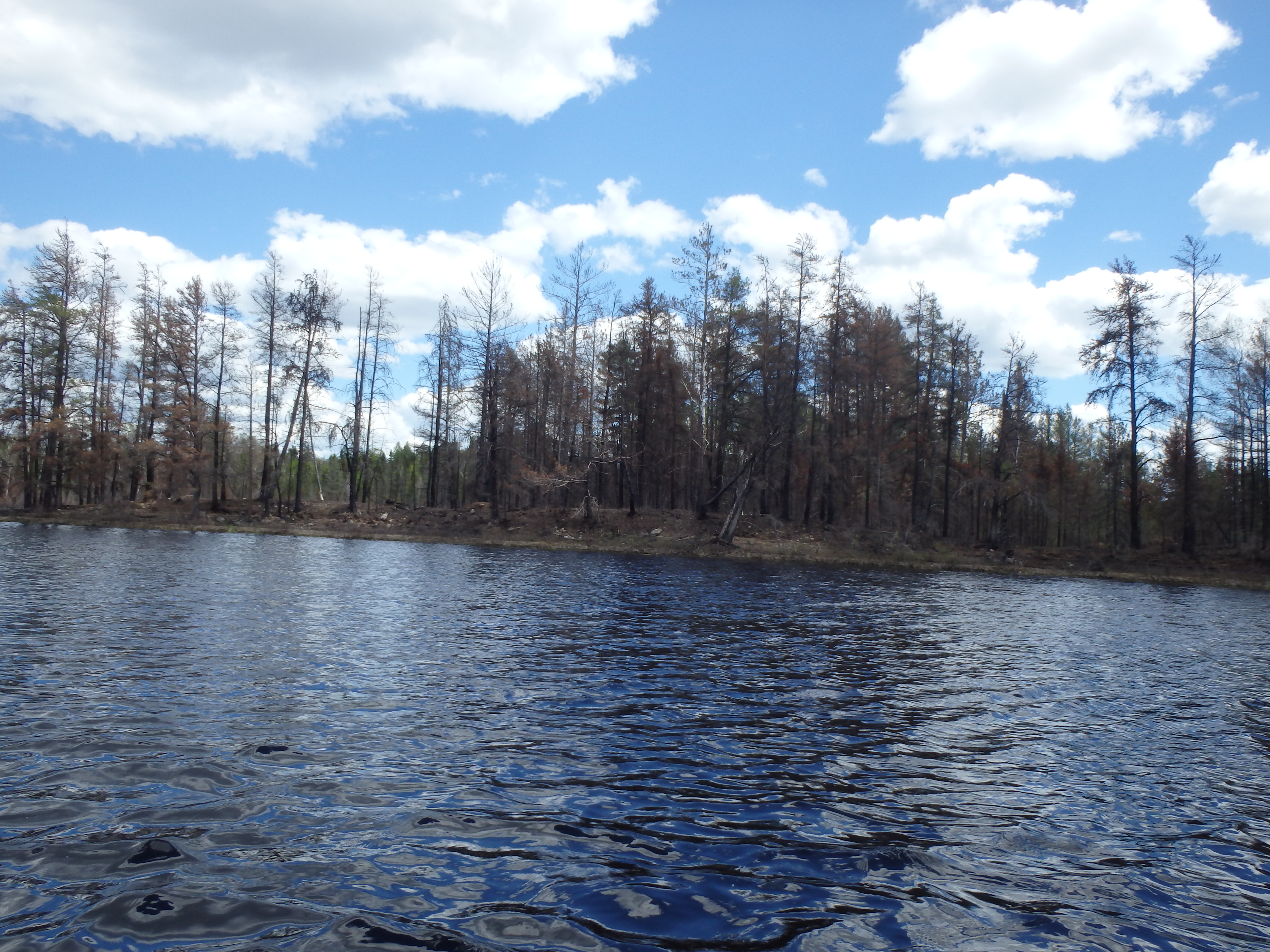
Filstrup led what NRRI describes as the largest lake-wildfire study of its kind in North America, built around the 2021 Greenwood Fire near Isabella, which burned about 26,000 acres of the Superior National Forest and surrounding land over August and September that year. His team sampled 30 lakes monthly from May through September 2022 — 15 sitting inside the fire's burned watersheds and 15 unburned control lakes elsewhere in the region.
The findings, published in Geophysical Research Letters, showed lakes in the burned watersheds carried more nitrogen and phosphorus, more dissolved organic carbon, more suspended sediment, murkier water and lower pH than the control lakes. Oddly, the extra nutrients didn't translate into more algae — the researchers think the added murk blocked enough light to hold algae growth back. What mattered most wasn't how much total land burned, but how intensely the shoreline itself burned and how close that burning got to the water.
Mercury is the piece the study couldn't fully settle. Nailing down exactly how much of that ends up in a fish fillet is the subject of ongoing, still-unfinished research.
The mercury question isn't academic for anglers up north. State health officials have already tightened fish consumption guidance in Cook, Lake and St. Louis counties, with additional advice to favor smaller fish since mercury builds up more in older, larger ones. Several area waters, including Devil Track Lake, Two Island Lake and Greenwood Lake itself, are on the state's list of waters impaired for mercury contamination.
Filstrup has said the bigger open question is how these effects play out over the long haul — his study captured conditions in the year after the fire, but how a burned lake's chemistry, and its fish, look five or ten years on remains largely unmapped territory.