The committee presented its 2026-27 work plan, developed with President Rebecca Cunningham and interim Executive Vice President for Health Affairs Bradford and tied to the Elevate Extraordinary 2030 strategic plan. Upcoming topics include training Minnesota's health care workforce in December, pathways into health professions programs in February, and One Health. Bradford said the year will close with a discussion of the financial pressures facing the health sciences and the Medical School, saying 'our aspirations must ultimately be supported by a sustainable financial model.' No vote was taken.
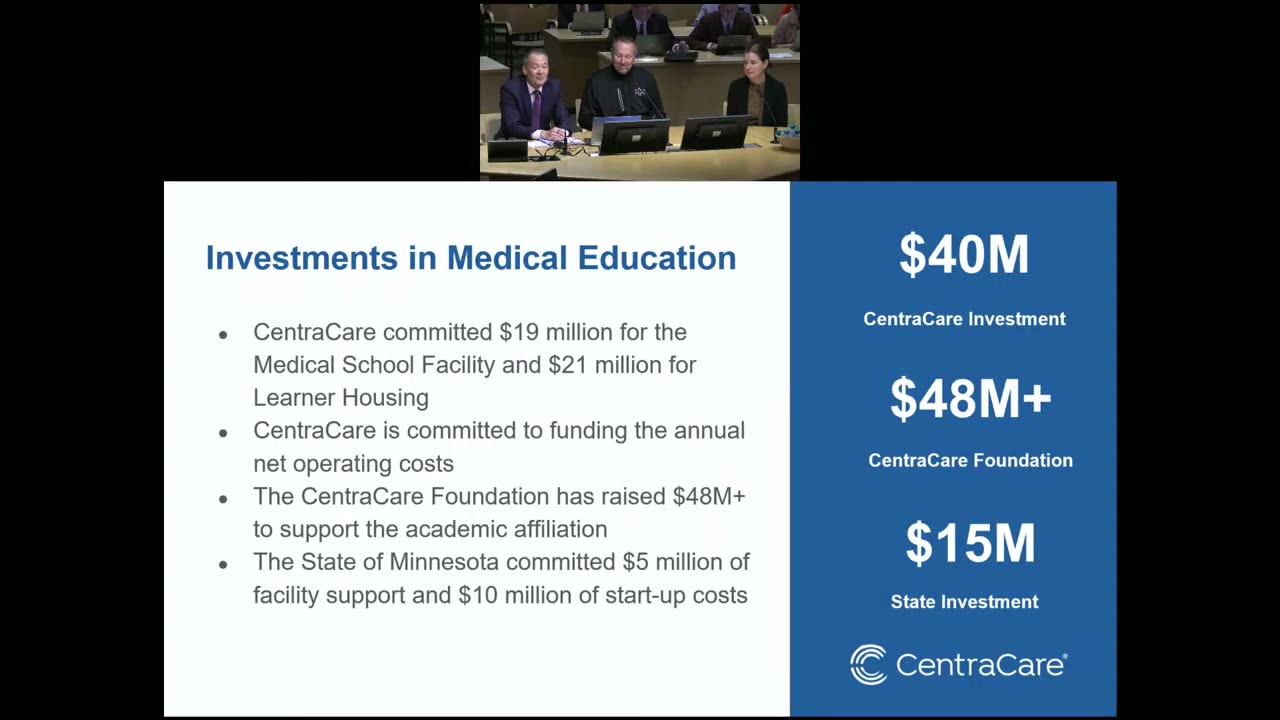
A CentraCare executive said the health system has committed $40 million to the partnership, including $19 million for the facility and $21 million for student housing next to the medical school. The CentraCare foundation has raised $54 million against a $50 million goal. The state has provided $10 million in program funding, $5 million for the facility, and $3 million for graduate medical education. The affiliation, which the regents approved in February 2023, is planned to reach full maturity in 2038.
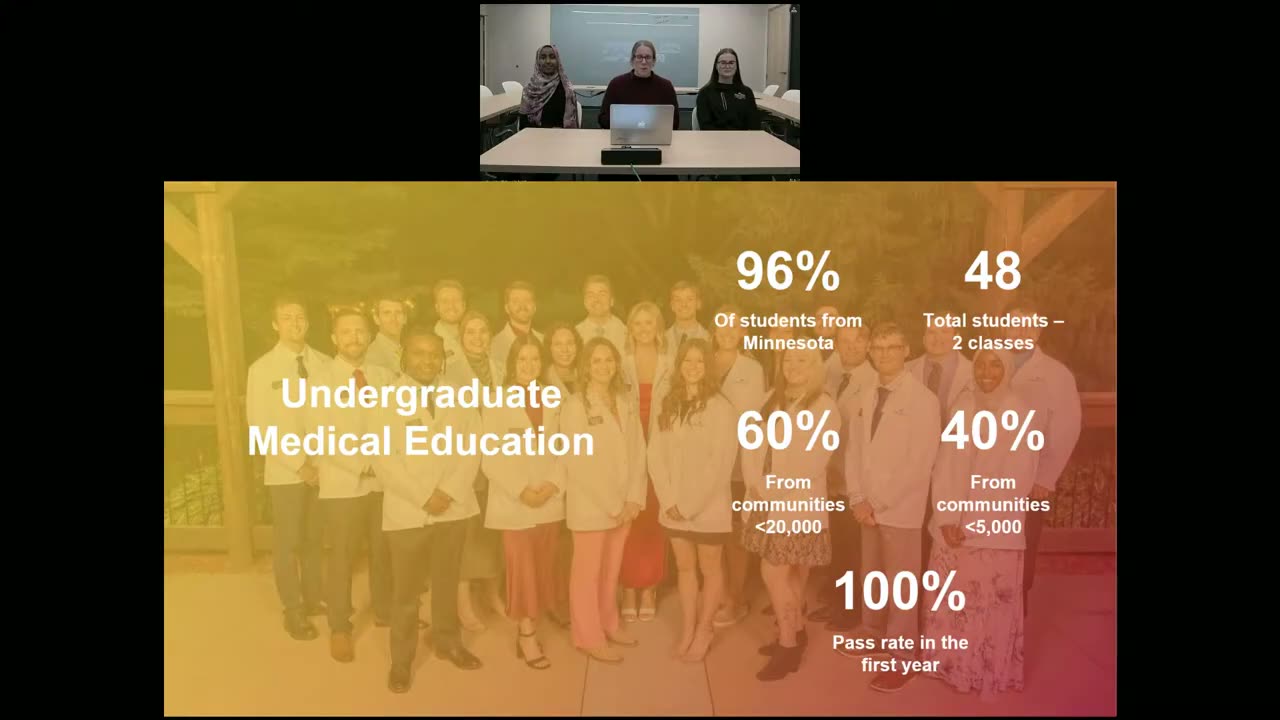
Leaders of the Medical School's CentraCare regional campus in St. Cloud said a second class of 24 arrived this fall, joining the inaugural class of 24 admitted last year. Campus leaders said 96% of students are from Minnesota, 60% come from communities under 20,000 people, and 40% from communities under 5,000. They said all of the first class passed their first year. That class begins clinical training across the CentraCare region this spring. Two students described choosing the campus to train near their rural hometowns.
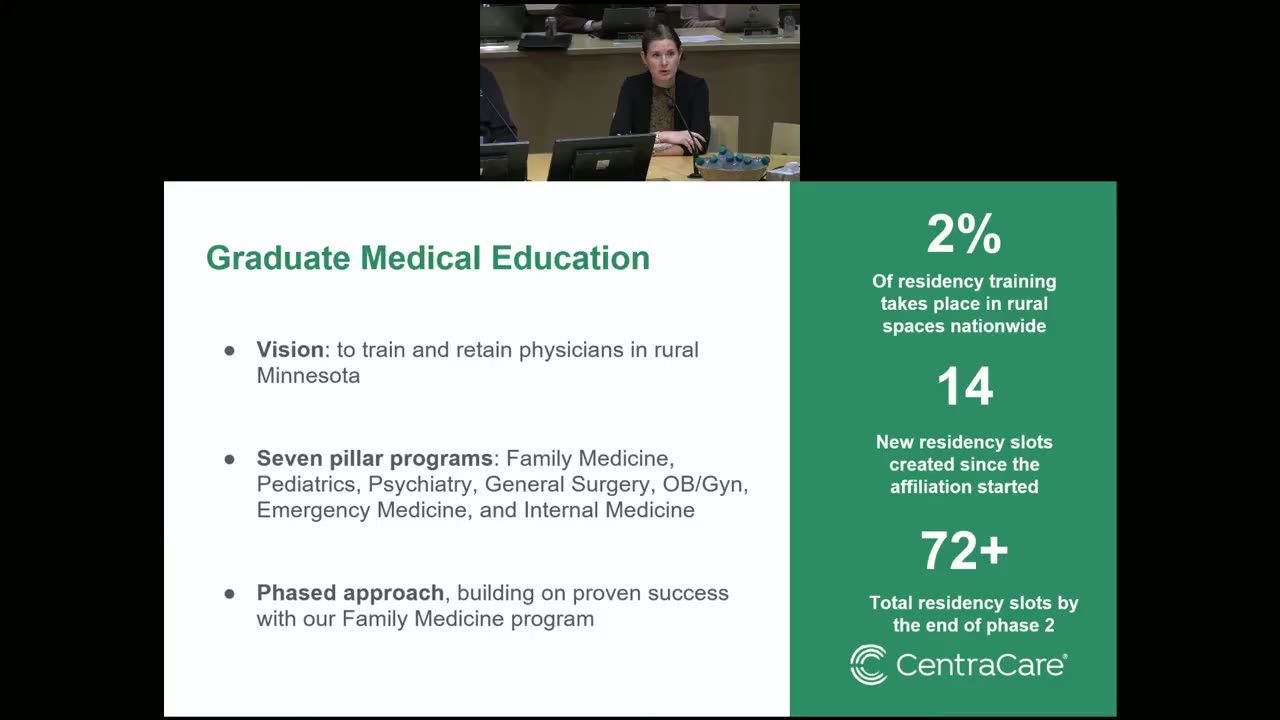
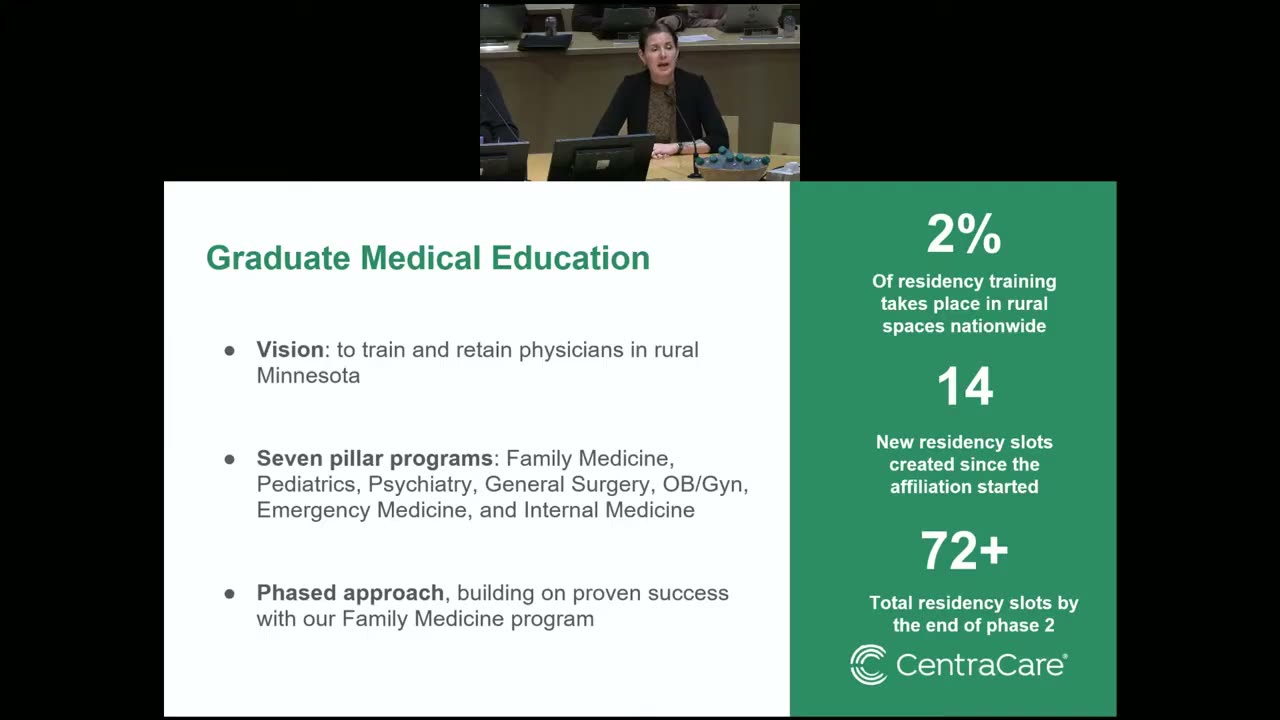
The campus's graduate medical education director said the partnership has already created 14 new residency slots and aims for more than 72 across seven specialties. The specialties are family medicine, pediatrics, psychiatry, general surgery, maternity care, emergency medicine and internal medicine. A second family medicine program started in 2025. Pediatrics, psychiatry and general surgery tracks are now recruiting, and emergency medicine and internal medicine are still seeking accreditation. The director said all five family medicine graduates this year are practicing in Minnesota.
Presenters asked the regents to formally approve a new optional fourth-year family medicine obstetrics fellowship meant to address rural maternity care deserts. The director described driving to St. Cloud while in labor during a high-risk pregnancy. The presenter said the item was on the agenda 'today,' but the committee took no vote at this meeting, so approval appears to be pending elsewhere on the Board's agenda. Recruitment would begin after approval.
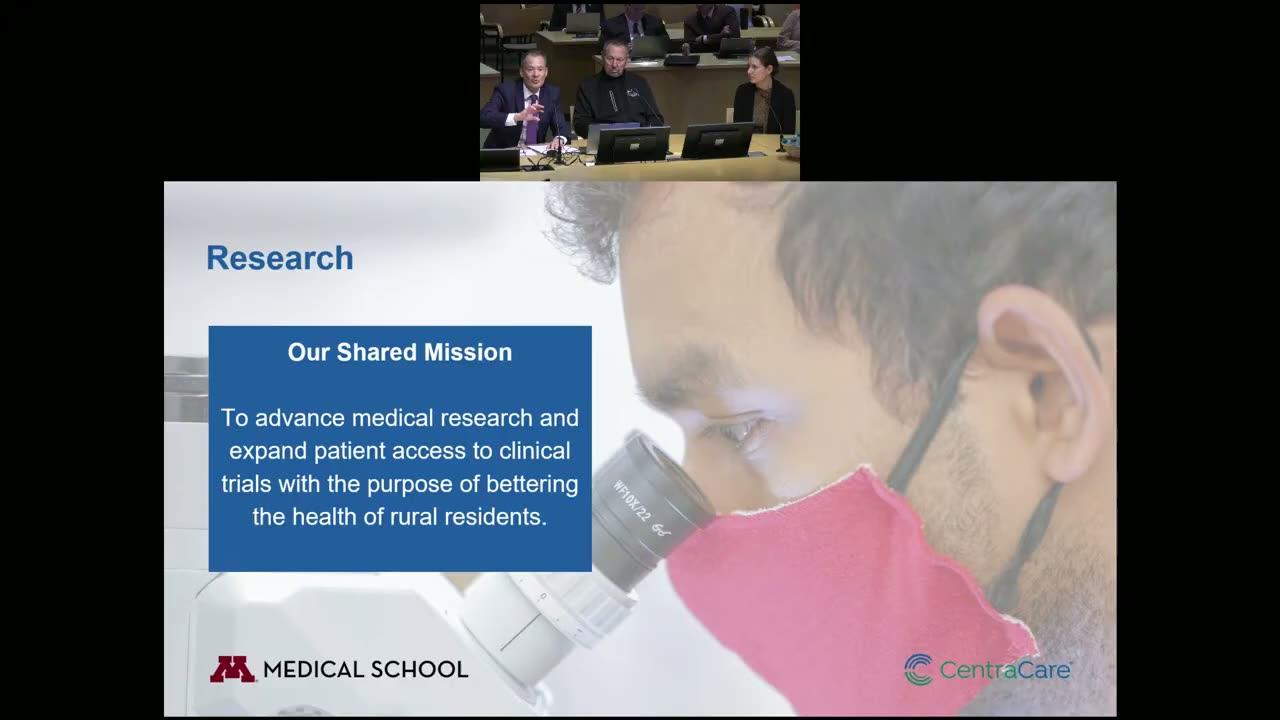
A CentraCare executive said that, given the size of its clinical operations, the partnership should be able to support $100 million to $150 million in additional research. He said the research would be structured with the Medical School to raise the university's Blue Ridge NIH funding ranking, where it was described as 25th. CentraCare also committed to becoming a 'learning health system' with the university's Center for Learning Health System Sciences.
Regents asked about disappearing small-town and tribal-area physicians and how graduates can practice locally as clinics close. Presenters cited state data showing the median age of rural physicians is 59, with one-third planning to leave within five years. They also said only 11% of physicians practice in rural areas, which are home to 20% of residents. Bradford said the university trains more physicians and health professionals for Native American and tribal communities than any other university. The St. Cloud campus is launching a two-year student leadership program this week.